
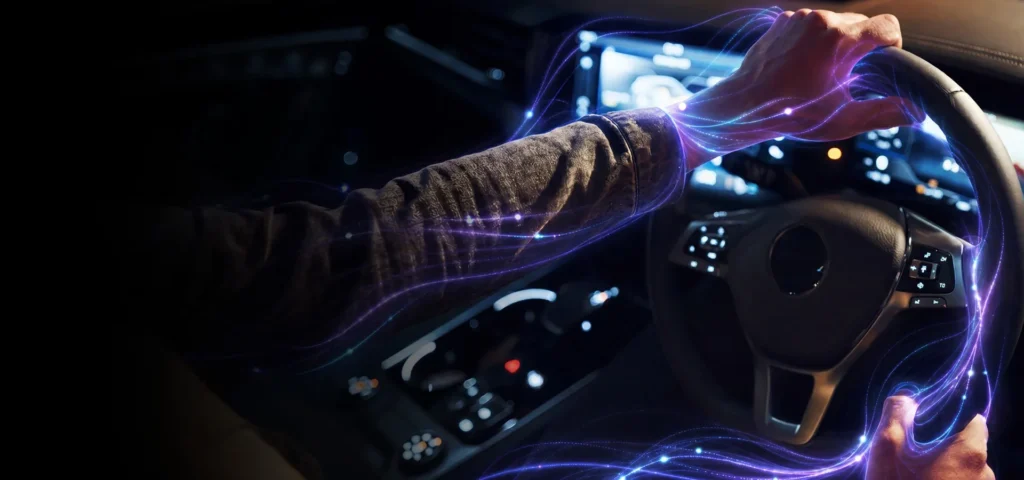
Designing better conversations between humans and vehicles
Safer automation starts with better human understanding
Advanced vehicle automation has the potential to make roads significantly safer. Yet technology alone is not enough.
Building trust between drivers and automation.
Making Human-Vehicle Interaction Safer
AutHUMate addresses this challenge by developing adaptive Human-Technology Interaction (HTI) strategies for SAE Level 2 and Level 3 automated driving systems.
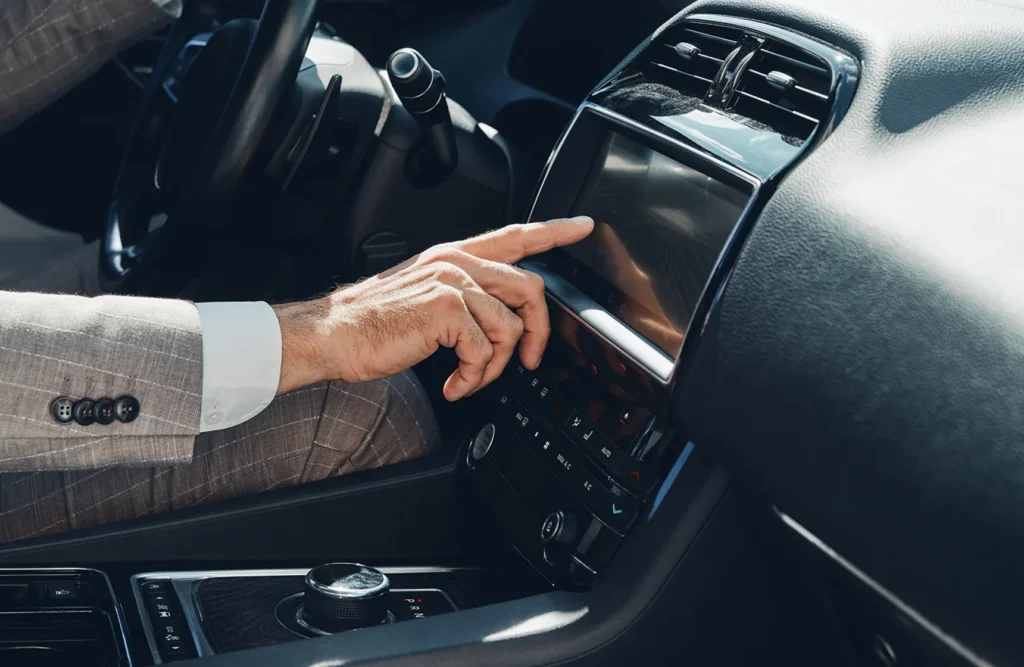
The human factor remains the missing link
THE CHALLENGE
Today’s advanced driver assistance and partial automation systems can support key driving tasks, but their effectiveness depends on how well people understand and use them. The project rethinks how vehicles sense, interpret and communicate with human users.
Technology should adapt to people, not the other way around
HUMAN-CENTRED AUTOMATION
Younger drivers may over-rely on assistance systems, older drivers may be more cautious or overwhelmed by information, while professional, digitally excluded or impaired users face different barriers.
We develop research-based personas to support adaptive, inclusive and context-aware interaction.
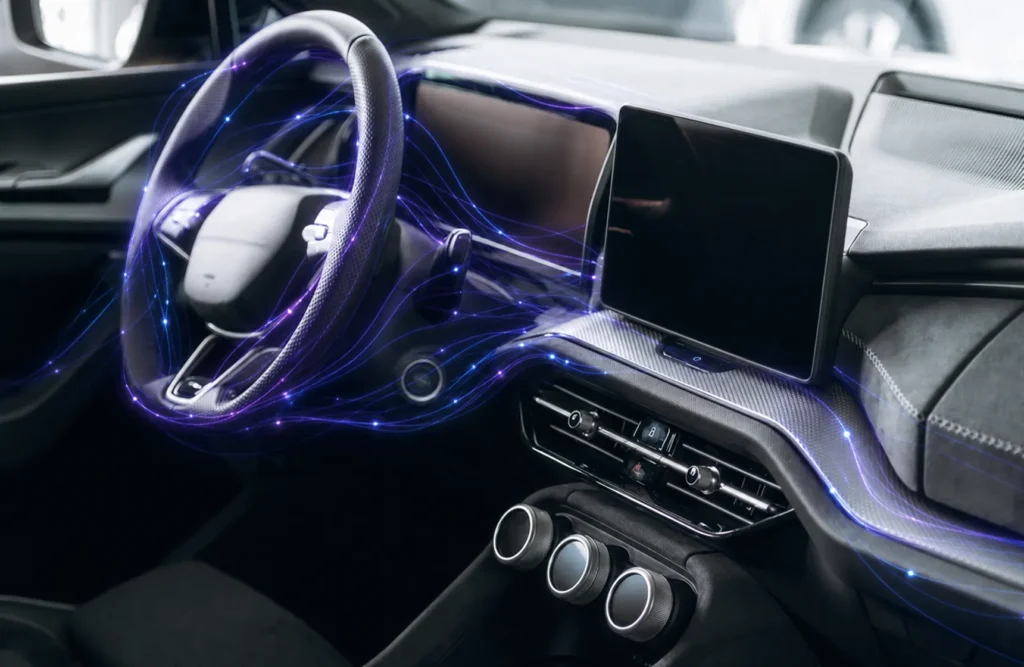
DRIVER-IN-CONTEXT INTELLIGENCE
Understanding the driver, not just the vehicle
THE RIGHT LEVEL OF TRUST
Recognising system capabilities and limits.
ADAPTIVE HUMAN-MACHINE INTERACTION
Traditional automation often positions the human as a backup operator.
The project shifts from isolated automation to human-automation teaming, enhancing awareness, communication and driver engagement.
The future is not humans versus machines.
It is humans and machines working better together.

PERSONALISED LEARNING & COACHING
One of the greatest human challenges in automated mobility is trust.
Too much trust can lead to over-reliance, disengagement of the driver, or dangerously delayed intervention.
Too little trust can prevent drivers from using potentially beneficial safety technologies altogether.
We focus on calibrated trust, the balance between confidence and awareness.

TRUST CALIBRATION & MODE CONFUSION
Understanding automation should not begin in the middle of a critical traffic situation.
The project explores innovative behavioural learning approaches that help users build confidence, awareness, and safe habits progressively.
- Pre-driving learning experiences
- In-drive adaptive coaching
- Interactive, game-based learning across both phases

TRUST CALIBRATION STRATEGIES
Automation only succeeds when people trust it.
We integrate societal readiness and inclusive design from the outset
The project explores trust, usability, accessibility, fairness and acceptance across diverse user groups

INCLUSIVE & SOCIETAL DESIGN FOR REAL LIFE VALIDATION
Where research meets reality.
AutHUMate’s innovations are designed to be tested in realistic environments:
- advanced driving simulators
- immersive VR/AR environments
- behavioural testing environments
- repeated interaction assessments
- evaluation across diverse user groups
- field operational testing in real traffic conditions

The right message.
At the right moment.
In the right way.